The Campaign for Khari Khariyali, 1841
How Mirpur became a part of Dogra Jammu and Kashmir.
At its height under Maharaja Ranjit Singh (1780-1839), the Sikh Empire (1799-1849) stretched from the Khyber Pass to the borders of Tibet, with Lahore as its capital and one of the most formidable and modernized armies in Asia. But after Ranjit Singh's death in 1839, the empire began to unravel. His son Kharak Singh inherited the throne, only to be assassinated by Dhian Singh Dogra, the eldest of the Dogra brothers and the empire's powerful vizier, in 1840. Dhian then placed Kharak's son Nau Nihal Singh on the throne, but the young heir soon died in a suspicious "accident," leaving Lahore without a clear successor.
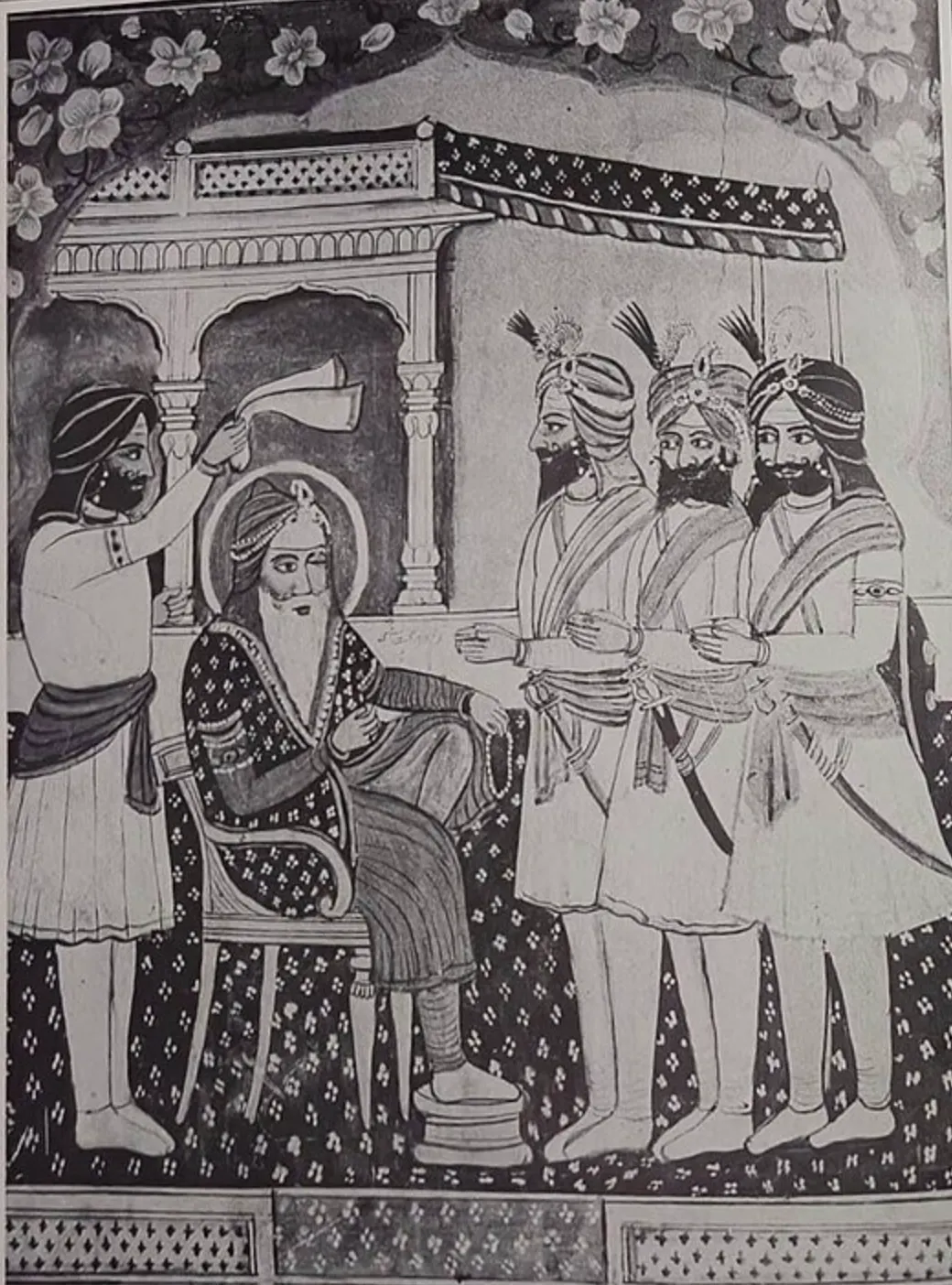
Ranjit Singh and the three Dogra brothers.
Dhian Singh invited another of Ranjit Singh's sons, Sher Singh, to Lahore. At the same time, a rival court faction led by the Sandhawalia Jatts clan -- and backed by Dhian's own brothers, Gulab Singh and Suchet Singh -- rallied behind Nau Nihal's mother, Chand Kaur, supporting her claim as regent for her unborn grandchild.
Dhian managed to broker a temporary power-sharing deal between the parties under which Chand Kaur was formally proclaimed regent on December 2, 1840. Dhian Singh immediately withdrew to his territory in the Jammu hills while Sher Singh returned to his estates in Batala. The plotting never stopped; before long, Sher Singh marched back to Lahore, and most of the Sikh Khalsa army sided with him against Chand Kaur.
Chand Kaur, along with 3,000 of her soldiers, led by Gulab Singh and Suchet Singh Dogra -- the youngest of the Dogra brothers -- soon found themselves besieged inside the Lahore Fort. After several skirmishes, the hopelessly outnumbered Dogra garrison surrendered. Dhian Singh once again brokered a settlement: Chand Kaur would abdicate in favor of Sher Singh, her supporters would be granted clemency, and she was given the revenues from the estates in Khari Khariyali for her retirement.

Panorama of Lahore City, circa 1840 (Bonhams).
After the brief civil war, Chand Kaur remained in Lahore, living in the Haveli Nau Nihal Singh, where she would later be murdered in 1842 by Sher Singh. With the termination of this civil war, her estates in Khari Khariyali were placed under the management of Gulab Singh, who had assisted her during the fighting. Gulab soon returned to Jammu as well and sent his general, Diwan Hari Chand, to assert control over the Khari Khariyali jagirs, which were still held by troops under the Sikh general Surat Singh Majithia -- a tense situation, given how recently the two sides had been at war.
This is how the maneuvering of the three Dogra brothers in a collapsing Sikh Empire moved from the siege of Lahore toward the siege of Mangla, passing through Khari Khariyali -- today's Mirpur tehsil, where I am from -- on what would become Gulab Singh's road to the throne of Jammu and Kashmir.
Khari Khariyali, which roughly corresponds to the area of today's Mirpur Tehsil, was laid out quite differently from today's Mirpur. It described a band of land about 10 kilometres wide between the ridge where present-day Mirpur now sits and the Jhelum River. The ridge was then forested and mostly uninhabited; settlements lay on its southern slopes or along the Jhelum's floodplain. The historical town of Mirpur itself lay beyond the ridge to the north, in a different region called Andarhal -- now largely submerged by the Mangla dam -- within the basin of the Punch and Jhelum rivers, and was not part of Khari Khariyali.
At the north-western tip of Khari Khariyali stood Mangla Fort, the region's historical capital. It had been the seat of the Muslim Rajput Chib dynasty, which had resisted Sikh invasions for years before finally being subdued by Maharaja Ranjit Singh in 1812. Near Mangla, the valley narrowed and the land became hillier -- terrain that made the fort's hilltop position especially formidable.
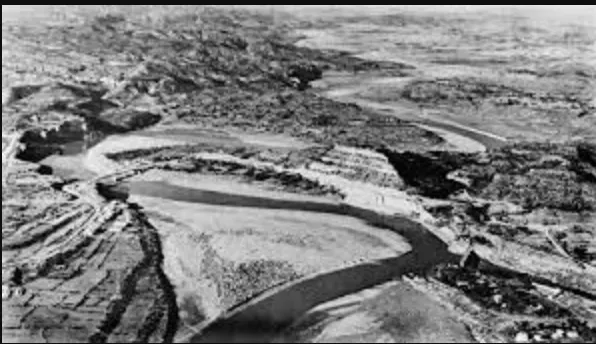 Mangla Fort (hill in centre), before construction of the Mangla Dam.
The Dogra army first struck at a small Mughal-era fortified town called Aurangabad -- known today as Sarai Alamgir -- on the east bank of the Jhelum. From there, they marched north along the river toward Sukhchainpur, the first defense of Khari Khariyali along the Jhelum.
A chain of forts guarded the eastern bank of the Jhelum, with Sukhchainpur to the south and Mangla to the north. Sukhchainpur's fort stood where the seasonal river Jari Nala meets the Jhelum, its walls protected by water on two sides and its position naturally strong.
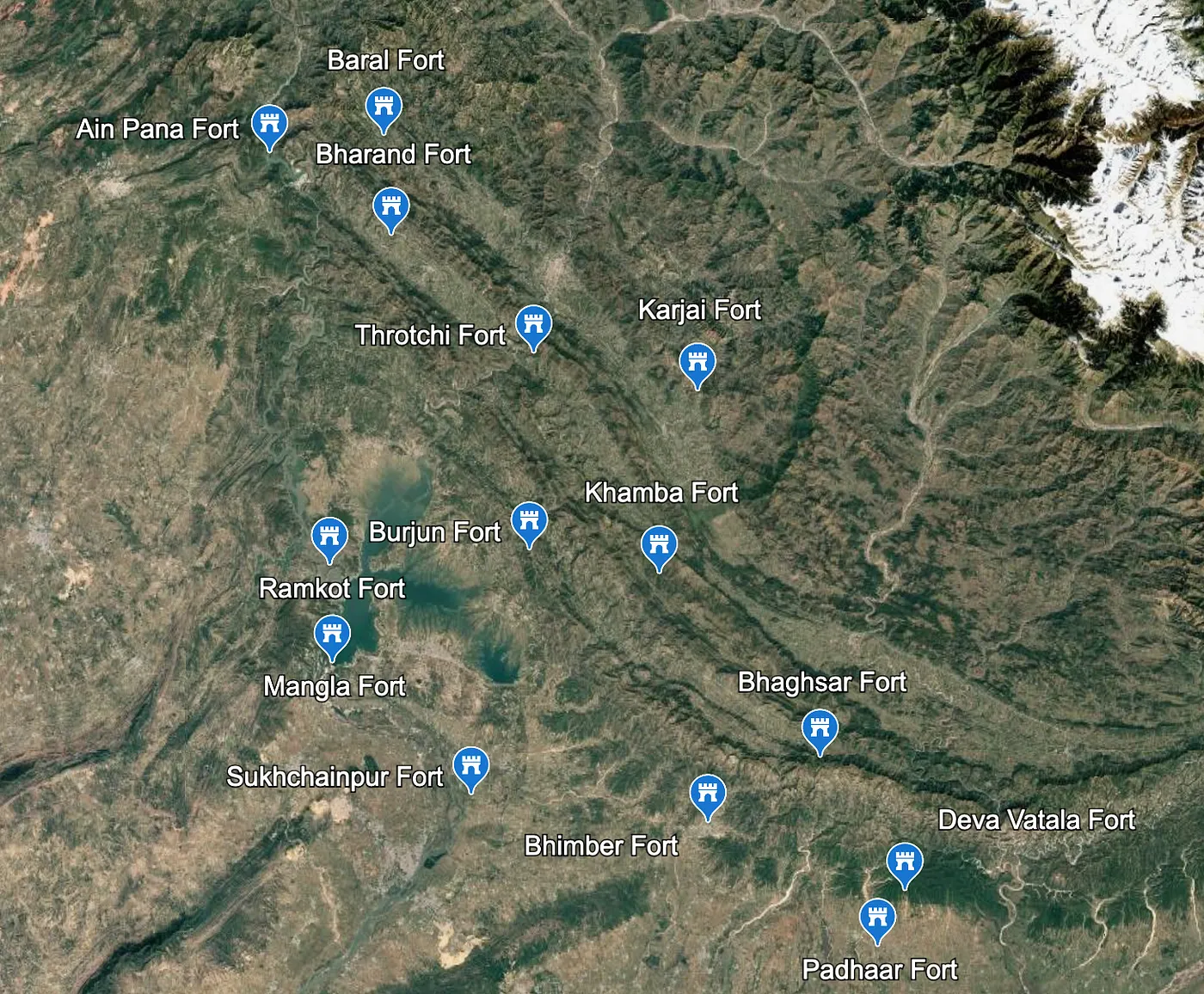 Forts of Southern Azad Kashmir.
Even so, the Dogra forces managed to storm Sukhchainpur, then pushed further along the Jhelum, seizing a fort called Kot Kandhari. From there, they advanced west toward Mangla Fort and laid siege.
Mangla Fort sat on a prominent hill surrounded on three sides by a meander of the Jhelum and could be approached from its east. Previous attempts to capture it -- even by Ranjit Singh himself -- had failed. In 1841, however, Diwan Hari Chand managed to destroy the fort's water source, forcing the defenders from the Sikh army to surrender after a 15-day siege. This marked the first time the Dogras gained direct control over Khari Khariyali -- control that would last 107 years, until the second siege of Mangla Fort by Pakistani forces during the Kashmir War in 1947. The 1841 campaign is what brought today's Mirpur Tehsil into the Dogra fold, and from there into the kingdom of Jammu and Kashmir -- and, eventually, into the Kashmir conflict that continues today.
Reading this account in the Gulab Nama, the biography of the first Dogra ruler Maharaja Gulab Singh, I tried my best to match the old place names with their modern locations -- and some of them, like Sukhchainpur, are still there. Last winter, my father and I visited this small town twice, now linked to Punjab by a bridge across the Jari Nala, and spoke with locals about its history and whether anything from that era might remain.
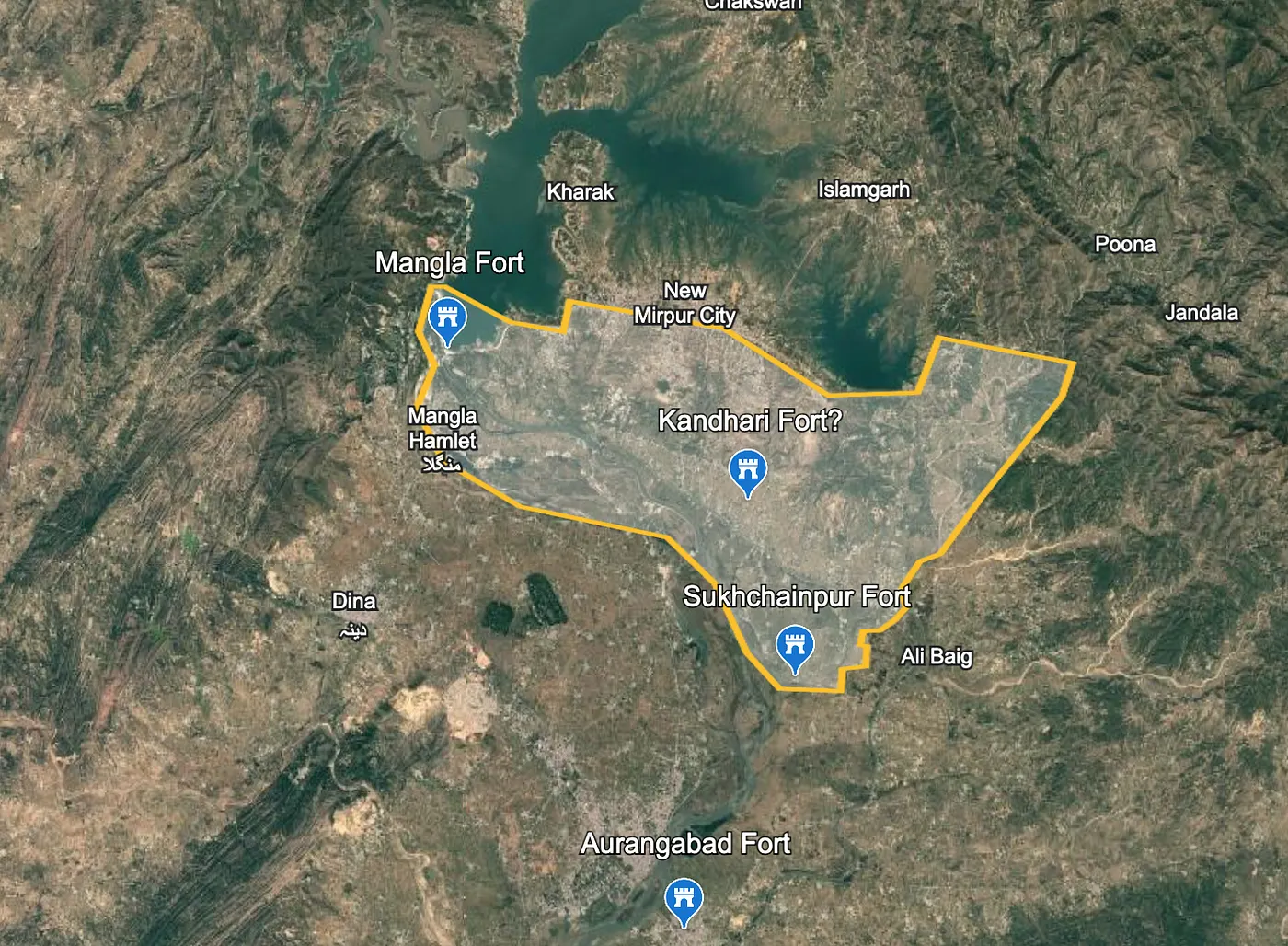 Approximate map of Khari Khariyali.
A Dogra-era thana also stood there, which might correspond to the fort we are looking for, but being so close to two rivers, the site has flooded repeatedly, as recently as 1992, making it hard to say if the original structure survived.
I couldn't match Qila Kandhari to any location I know in the area, but that only shows how much of our history has been lost. On the way to Sukhchainpur, I passed many villages built on raised mounds across the Jhelum floodplain, each of them likely sitting on hundreds of years of history.
The Dogra campaign and the siege of Mangla may seem like distant history, but their traces still linger in the land and stories of Khari Khariyali, and continue to shape the lives of people in the region today.
1. Sources
Gulabnama Of Diwan Kirpa Ram Persian History Of The Maharaja Gulab Singh (published 1876). Archive.org