Still Life
In 2010, when the Three Gorges Dam was still filling up to become the world's largest reservoir, work had just been completed at a different hydropower project at Mangla, hundreds of miles away. That winter, as on every Eid, five-year-old me accompanied my family to visit my grandfather's close friend in Kharak, a village adjacent to the reservoir, just a fifteen minute drive from our home. Their house had residential rooms with white plastered walls on the far end of the property, space for storage and cattle on the other, and a very large courtyard in between. We drank oversweetened tea made with milk from their own goats.
The next year when I visited, there was no home. They had moved to the other side of town, "New City," it was called. Most houses in the village had been cannibalized for bricks; the few mansions that still stood seemed to be in disbelief of what was happening around them. The year after, when the summer snowmelt finally inundated the village before water levels fell in the winters, the mansions had fallen apart and the trace of the road itself was disappearing.
The year after, the village was just a mound of bricks and trees.
The year after, even the trees had died.
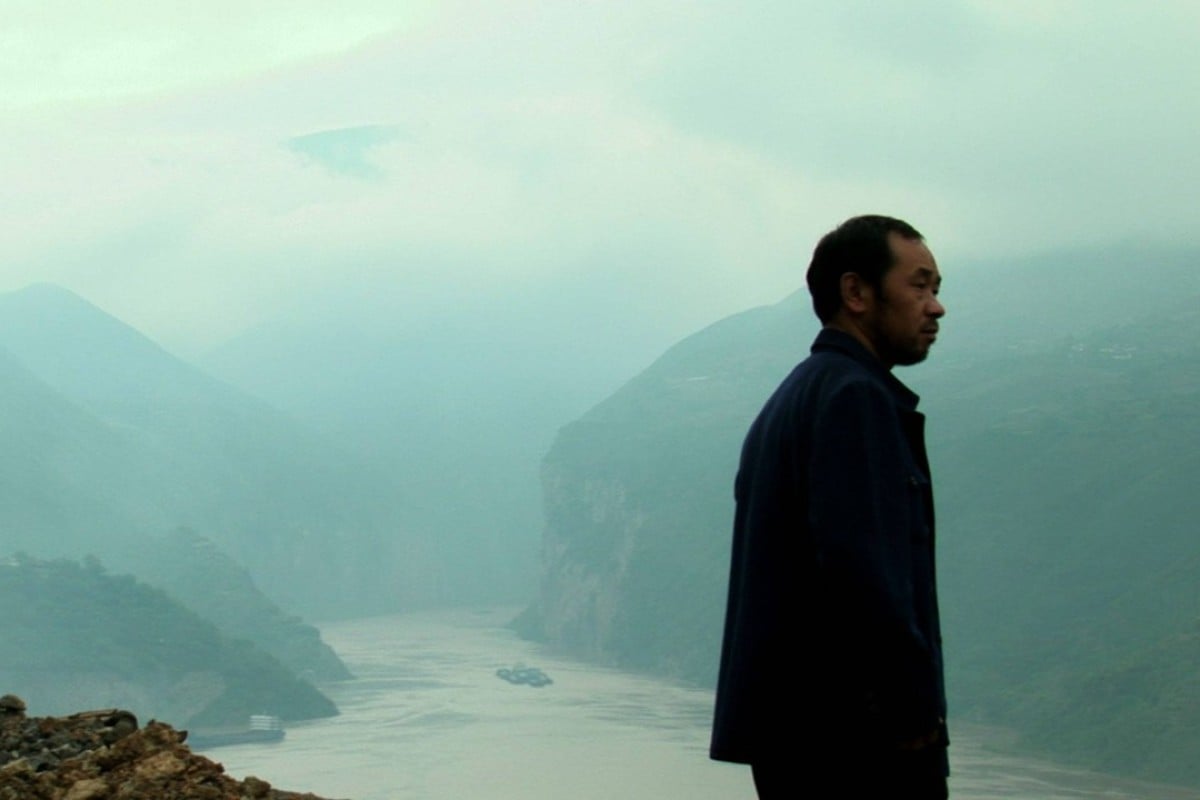
This year I came across Still Life by Chinese director Jia Zhangke, a film about a town slowly being inundated by the Three Gorges Dam, a town that no longer exists. I knew I had to watch it.
Many of Jia's stories are about a kind of rising tide, the deluge of social and economic growth in China through the 90s and 2000s. In Fengjie, this tide can be experienced in the flesh. The story follows Han Sanming, a laborer, and Shen Hong, a nurse, who return to the city of Fengjie in search of their estranged spouses.
They arrive by riverboat; the Yangtze has already swallowed the roads and lower buildings of the town, leaving Fengjie sealed between water and cliff. Neighborhoods have been erased, old addresses lead to water, and the people they seek are now untracked.
Much of what remains of Fengjie is being taken apart by hand. Construction workers appear in films often enough, but usually as scaffolding behind someone else's story. Entire movies are built around Wall Street bankers, Hollywood stars, and tech billionaires; their work is given tension, drama, and consequence. I cannot think of another film where labor feels so inseparable from character as Still Life.
Jia's use of naturalism makes this possible. The conversations between characters meander, the story is littered with as many small logistical frictions as real life, and the background is ambient car horns and city noise. Without the usual dramatic emphasis, the familiar feels unfamiliar, and just like the protagonists, you begin to feel lost in Fengjie.
Han Sanming is played by Jia's cousin, a real Shanxi coalminer. Following him through the city, through small talk with strangers, seeing him share cigarettes with the other workers, you feel the self-dignity and camaraderie of this life made vivid. Later, the family of a laborer injured during construction argues with local officials in a bare bureaucratic office, both sides stared down by portraits of various Communist leaders from above. There is no dramatic score, and the arguments from neither side feel refined. It is just another day, another complaint at the party office. You come out with a feeling stronger than sympathy, because sympathy would require distance, but you are already inside their life.
In between the more dialogue-driven scenes, Jia constructs Fengjie itself: construction work becomes an orchestra in industrial ruins, sledgehammers and pickaxes swinging. The film moves chronologically between two parallel stories that never overlap, held together by the landscape around them.
Jia uses the rising river to timestamp the movie as the old city is dismantled, half-demolished walls and ruins of old Fengjie drifting through the frame until the film also becomes a historical document of the city's last moments. Dialogue happens against collapsing walls and rising water. The city is disappearing even as the characters move through it.
Occasionally, Jia lets the impossible enter his otherwise naturalist world: a tightrope walker crosses between two crumbling towers, a building lifts off like a rocket. Jia has argued this is intentional; the dam itself is so surreal in its scale that only the impossible can represent it. And sometimes it works. I don't think it does when a UFO flies across the sky, because it breaks the immersion the film has spent so long building.
When the protagonists do find their spouses, neither recovers the person or the life they came looking for. Jia frames these moments against the landscape: Shen Hong's choice to leave against the newly raised walls of the dam, Han Sanming's unfulfilled desire to reunite against collapsing towers. What was familiar has become unfamiliar to them, too. Brick by brick, person by person, our lifetimes are displaced, and we realize the past is no longer there.
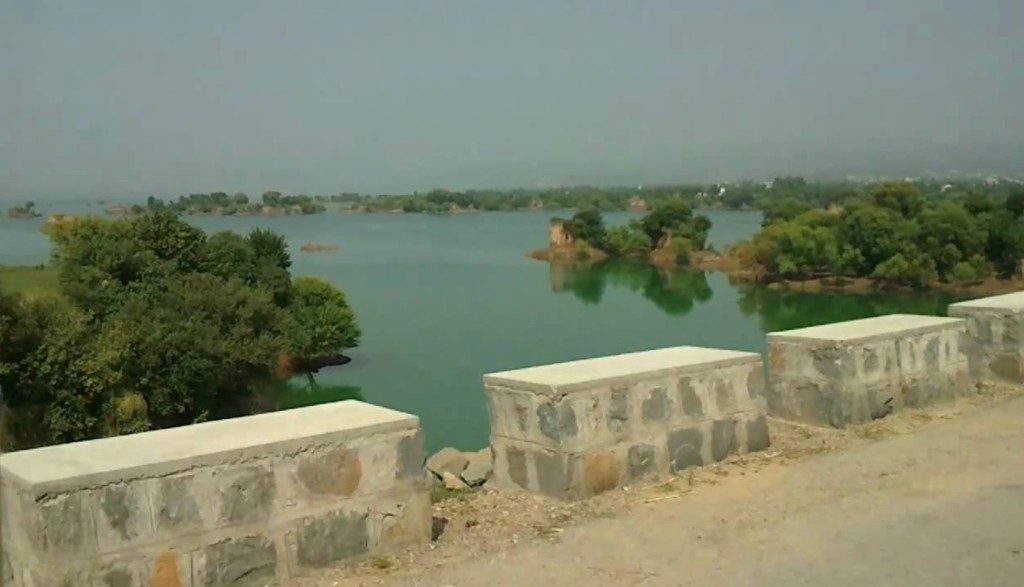
I remember my uncle working in the agricultural department. When the entire state machinery of my city turned toward the dam, his task was calculating compensation for the displaced families of Kharak. Once, he explained it to me as a joke: his job was to count every plant in every farm, grain by grain. As a child, I pictured him walking through endless fields, his fingers indexing each kernel. Of course, he couldn't have—there were simply too many. But then, what had happened to all the grains left uncountable?
Amid progress, Jia Zhangke asks: when the tide rises, does it carry everything with it? And what is left to submerge?
As the Yangtze rises, Han Sanming and his team hammer away at the ruins of old Fengjie. Mirroring them, a white hazmat-suited team disinfects the remains, two crews working in parallel, almost invisible to each other. They spray the crumbling walls without pause, working inaudibly, invisibly, sterilizing what remains.
Steel shatters, glass splinters, bricks turn to dust. The ruins will always be there under the water. But disappearing memories leave no rubble.