Objectivity
Yesterday, I came across a nature-documentary-like video showing oxpeckers eating ticks off a buffalo, with a David Attenborough-like voiceover. And while oxpeckers do eat ticks off of buffalo in the savannah, and the voice-over is factually correct in its descriptions, the video itself is AI-generated (at which point I stop watching it). Who is to say this seemingly well-intentioned "educational" video is objective or bears any resemblance to reality?
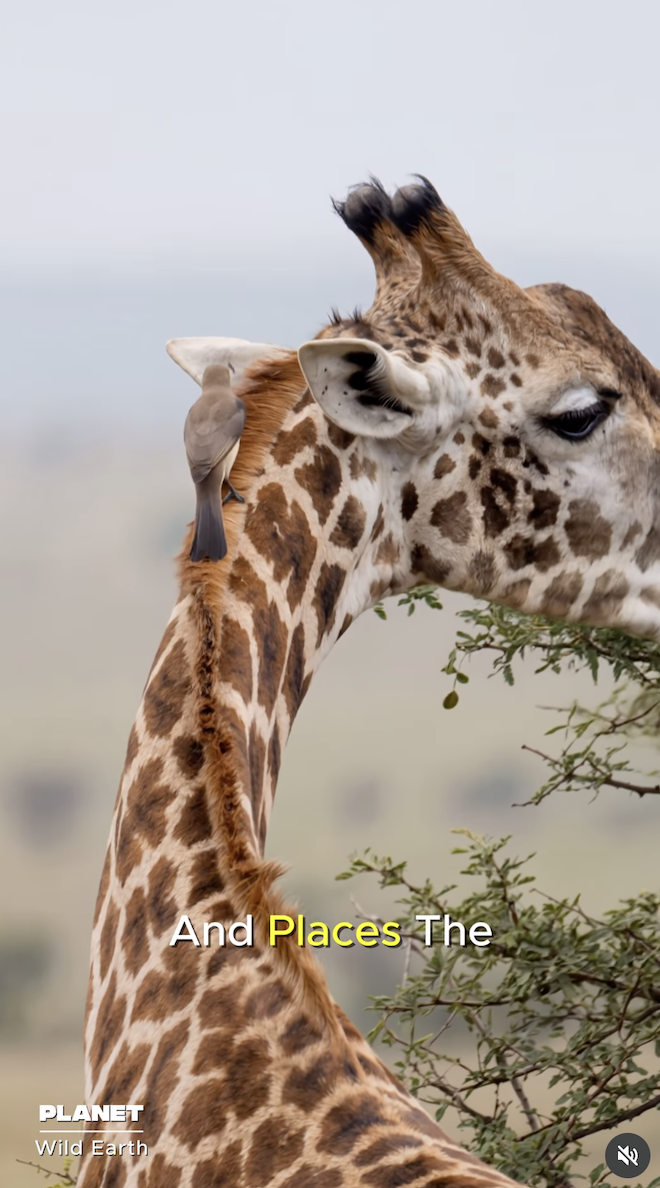
AI-generated reel. Source: Instagram.
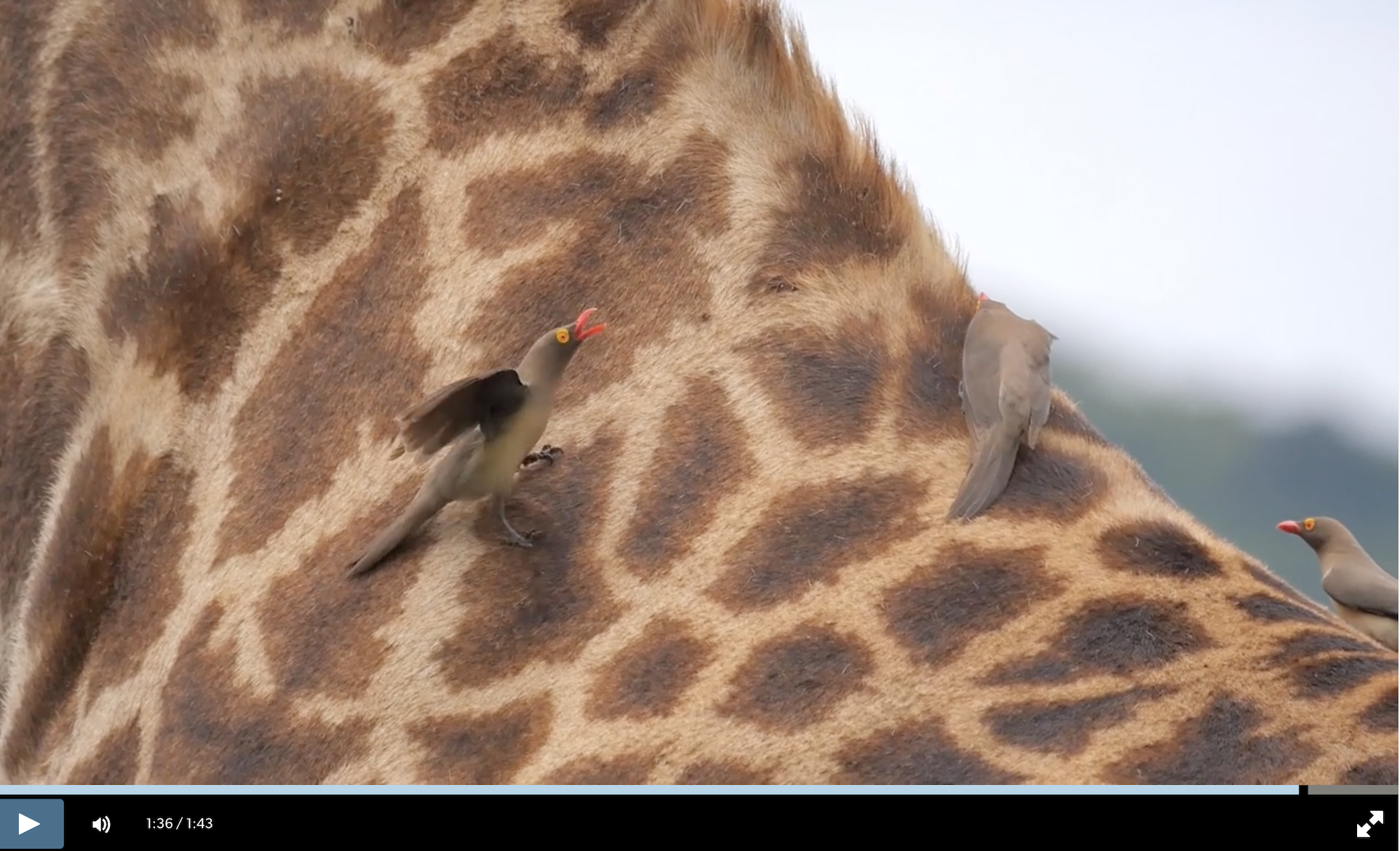
Red-billed Oxpeckers. Source: Birds of the World.
Okay, it took me a second.
In the book Objectivity, Daston and Galison study the history of objectivity as a concept and discuss how it evolved over time, driven by changes in technology, philosophy, and shifting standards within scientific communities of what counted as rigorous, and what counted as the scientist's subjectivity getting in the way.1 They do this through analysis of scientific atlases: botanical catalogues, anatomical diagrams, and crystallography plates. Such an atlas has two aims: pedagogy and accuracy. To communicate the "thingness" of a phenomenon, the image has to be clear enough to teach and faithful enough not to lie, and those two demands can pull against each other. D&G's point is that even seemingly abstract concepts like objectivity can be studied through the practices around them: institutions, procedures, material constraints, and ethical attitudes that govern scientific image-making.
In the 18th century, atlases tried to depict ideal forms: the orchid in full flower, not as a single real-world instance sampled as-is, even if that reflects only a fraction of its total existence, not broken or bug-eaten but in perfect condition, a non-existent ideal. The cataloguer and sketcher decided what counted as ideal. D&G call this truth-to-nature: the expert deciding which specimen best represents the type because they understand the phenomenon deeply enough to make that call.
The cataloguer's judgment was what gave the atlas its authority, but it was also what made it vulnerable. If the botanist decided which specimen was ideal, which angle was most representative, which imperfections to omit, the atlas was as much a record of the botanist's judgment as of the plant itself. The photograph seemed to solve this: a mechanical process with no human interference, and one with indexicality, the image tracing the thing itself. D&G call this mechanical objectivity. And once photography existed, the idealized drawing became insufficient.
But a perfectly faithful image of one specimen in bad light, at an odd angle, half eaten by insects, is accurate and useless. The trained expert still had to decide which photograph to include, what it should show, and whether it was representative or an outlier. D&G call this trained judgment, irreducible, because no image selects itself. The photograph moved the judgment from creation to curation.
Nature documentaries are not scientific atlases, but they face a related problem: they use selected images of particular events to tell us what nature is generally like. That is true whether the footage of oxpeckers eating bugs off a buffalo is real or AI-generated; what changes is the relationship between the image and the event it appears to document. In terms of truth-to-nature, the AI video is generated from visual patterns learned across many representations of similar scenes, producing something plausible rather than recording a particular event, and sometimes showing it from camera angles that would be impossible to document. Better models and more data might make that synthesis more accurate, maybe accurate enough for an infographic. But it presents itself as mechanically objective: photorealist, immediate, the way footage looks, carrying the indexical signal that this was captured. It imitates truth-to-nature, but without an expert choosing and defending what is representative. Better training can make the depiction more accurate, but it cannot give the image the relationship to the world that its photographic appearance implies. The scene might be perfectly plausible. The problem is that it looks like evidence of a particular event that was recorded, when no such recording took place.
This also applies to a lot of historical slop I see everywhere: depictions of historical figures where any truth-to-nature has to be argued for explicitly, and the best we have is a recreation worked backward from portraits of that era, themselves idealized and curated. For historical figures, there was never indexicality to begin with, and the AI depictions don't seem to acknowledge what is being used to fill that gap. At least the oxpecker is real and could be filmed. A survey of Western European castle architecture I've been reading, consisting of idealized sketches alongside photographs of real sites, shows how trust is built differently across disciplines by combining photographs, curated examples, and expert judgment in different ways. A photorealist AI video of Charlemagne has none of these unless a historian explains and defends the choices behind it.
And unlike an atlas, where many individuals can audit each other's reasoning and debate what belongs, the reasoning that produces the AI image isn't transparent in any comparable way. When the botanist chose which orchid to draw, that choice could at least be made legible, arguable, and correctable. Here, we usually get only the finished image. This is less a problem of whether we can interpret what is happening inside a diffusion model than one of provenance: what sources informed this particular depiction, what decisions were made in constructing it, which parts are observation and which are inference, and who has checked those inferences? The model has no trained judgment in D&G's sense unless we deliberately build that judgment back into the workflow.
But you didn't need a long-ass article to tell you AI slop sucks. Once we can name what is wrong with it, can we do something about it? There are already benchmarks for AI-generated scientific diagrams, such as SciFlow-Bench,2 that evaluate things like structural fidelity, semantic precision, and logical correctness within the much narrower context of AI-generated scientific diagrams. Could Daston and Galison's history of scientific image-making give us something to add to them: standards not just for whether an image is accurate, but for what kind of claim it is allowed to make, where judgment can enter, and what provenance it has to expose? If objectivity has always depended partly on systems of practice and ethics around representation, perhaps the question for AI is how to build those systems again.
Footnotes
-
Thanks to Professor Morar for introducing me to the book. He has also written about cartographic atlases as artifacts for understanding how geographic knowledge was transmitted between China and the West. ↩
-
See Zhang et al., SciFlow-Bench: Evaluating Structure-Aware Scientific Diagram Generation via Inverse Parsing, ACL 2026. ↩